XWF15 House

XWF15 House

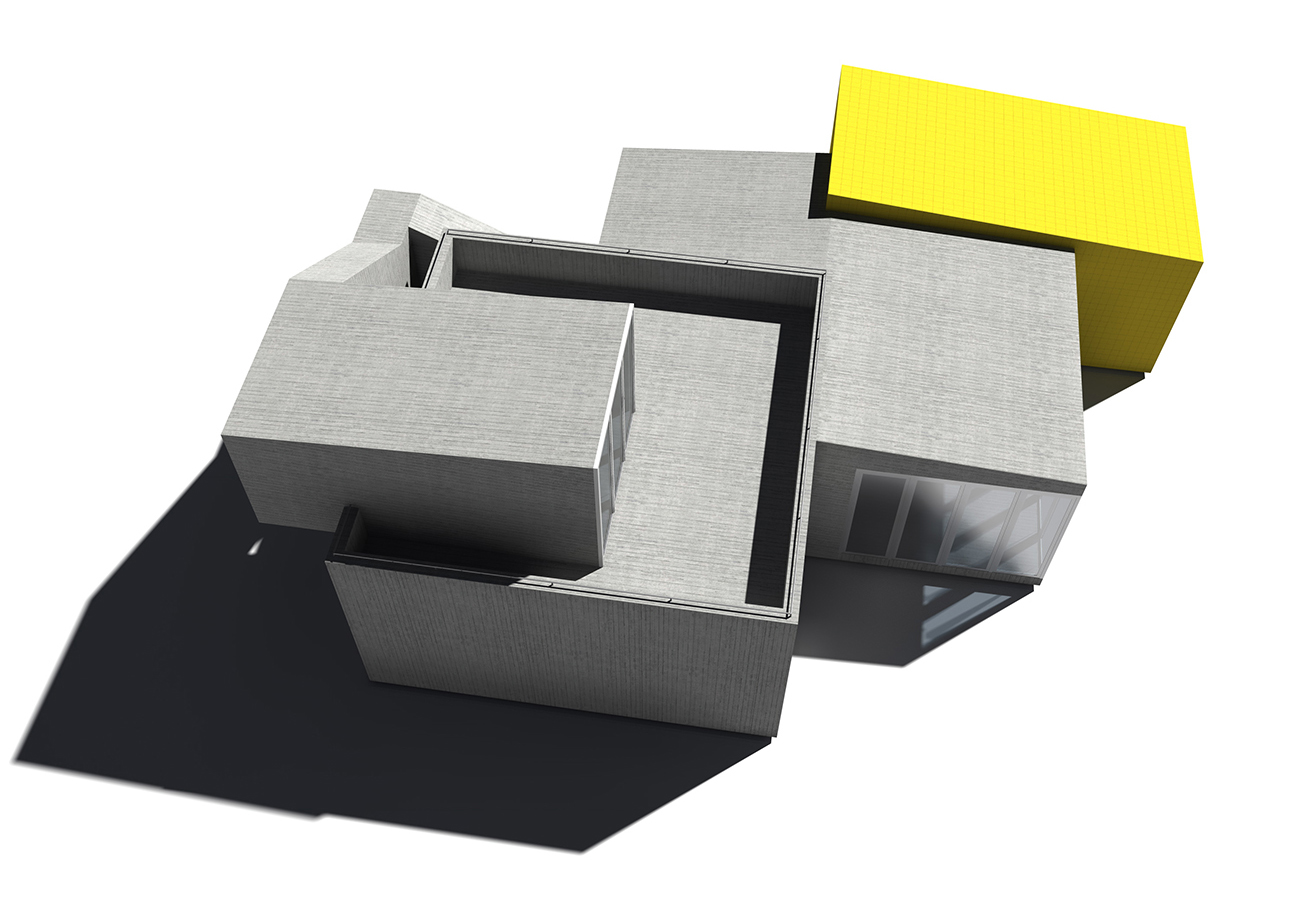
This house represents an experimental composition of simple geometric forms combined into a cohesive whole. The variety of volumes and their bold combination highlight a modern approach to architecture, where each element plays a role in creating visual contrast and functionality.

The bright yellow block stands out against the gray concrete volumes, creating an accent effect and drawing attention to the architectural asymmetry. This feature adds dynamism to the entire composition, giving the building uniqueness and an element of play with the perception of color and form. The yellow block can be interpreted as a symbol of distinction or independence, emphasizing its significance within the overall structure.

Each volume of the building has its own function, highlighting a modular approach to design. The simplicity of the forms makes the architecture easy to read and allows for an understanding of the interaction between the internal spaces. Large windows ensure the penetration of natural light and visual connection between the interior and exterior, enhancing the sense of openness and transparency.

The entire project represents a balance between simplicity and innovation, emphasizing the idea that architecture can be both functional and artistic. The house creates harmony through contrast, combining clean lines and bright colors into a unified form that captures attention and sparks interest.

CAC House

CAC House

The concept of this house is built on the contrast between the heavy, industrial lower part and the lighter upper volume. The lower level is made of concrete and rests on diagonal supports, creating an impression of reliability and stability, while also adding visual dynamism and lightness despite the massiveness of the material. The facade lines are emphasized by horizontal bands, making its structure more expressive.

The upper volume is clad in wood with a herringbone pattern, adding a textural contrast to the smooth concrete surface below. This element symbolizes harmony between nature and industrial aesthetics, creating a balance between warmth and strictness. The visual heaviness of the upper block seems to hover above the lower part, giving a sense of smooth transition from massive to light.

The facade and structure of the house express the idea of modularity and independence, where each element is a separate part of the whole, but together they form a harmonious composition. The combination of materials and textures enhances visual interest and makes the building unique in its execution. The house is both a functional space and an architectural experiment, playing with the balance and perception of mass and lightness.

XVZ55 House

XVZ55 House

This building presents a duality, expressed through the contrast of materials and forms. On one side, a façade of gray tiles embodies solidity, tradition, and a sense of weight. It evokes the architectural language of historical structures, with clear, precise lines creating a disciplined and reserved exterior. The steps leading to this part of the building further emphasize its stability and groundedness, offering a sense of permanence.

On the other side, a glass wall introduces transparency and modernity. This part of the structure represents openness, lightness, and fluidity, creating a dynamic dialogue with its solid counterpart. The glass façade reflects and interacts with its surroundings, making the building part of the environment and drawing light into the interior. The interplay between the opaque and transparent surfaces symbolizes the balance between tradition and innovation, permanence and transformation.

Conceptually, this building speaks to the tension between the past and the future, between what is solid and unchanging and what is open and adaptive. It is a structure that respects tradition but is not bound by it, embracing modernity without losing its sense of heritage. The integration of contrasting elements challenges the viewer to consider how the past and present can coexist and complement one another.

Toun expedition

Toun expedition

The architectural concept behind this design emphasizes the notion of modular, standardized living, where each unit is designed to be both uniform and adaptable. The repeated, consistent shapes create a sense of rhythm and order, reflecting a larger commentary on urban planning and contemporary living. Each module stands as an individual entity, yet is intrinsically connected to the others, forming a collective structure that hints at community and shared space.

The arrangement of these units in a grid-like pattern evokes a sense of precision and control, characteristic of modern urban layouts, but it also allows for flexibility in how the units can be positioned and connected. This duality captures the tension between individuality and conformity, suggesting that within a seemingly rigid system, there is room for personalization and variation.

The open, transparent design of each unit symbolizes accessibility and openness, creating a dialogue between private and public spaces. This transparency could also represent a desire for clarity and connection in urban environments that often feel isolating. The design speaks to the modernist principles of simplicity and functionality, focusing on creating efficient living spaces that are straightforward yet aesthetically refined.

Overall, this concept explores how architecture can mediate between personal identity and collective belonging, bringing forth a vision of a harmonious, yet structured community where efficiency and aesthetic appeal coexist.

Guldedava House

Guldedava House

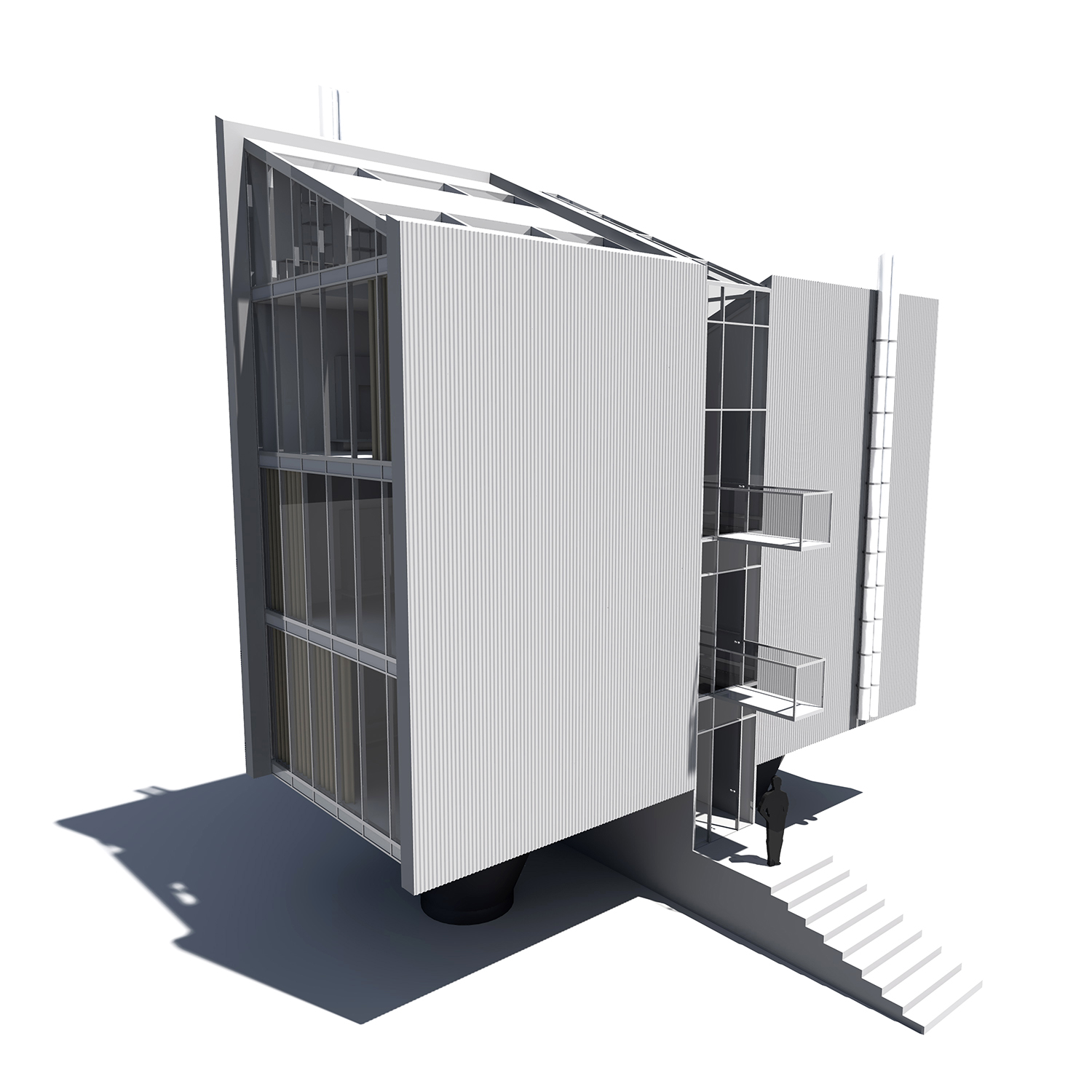
This house embodies the concept of modernism and technology, emphasizing transparency and lightness in design. The shape of the building resembles the tip of a blade or a sail, pointing upward, symbolizing movement, forward-thinking, and progress.

The transparent glass facades open up the internal spaces, creating a sense of lightness and weightlessness, while also allowing light to penetrate inside, making the interior brighter and more spacious. These elements visually connect the interior with the external environment, blurring the boundaries between inside and outside, enhancing the feeling of freedom and openness.

The visible metal frames and balconies give the building an industrial appearance, symbolizing strength and resilience. The presence of open walkways, staircases, and platforms points to functionality and practicality, allowing for easy movement throughout the space.

The house seems to hover above the ground, supported by black pillars, creating an illusion of weightlessness and emphasizing the concept of minimal contact with the earth. This architectural composition makes the house resemble a futuristic object, existing on the edge of reality and fantasy, and highlights its technological and avant-garde character.

Elleonora Residence

Elleonora Residence

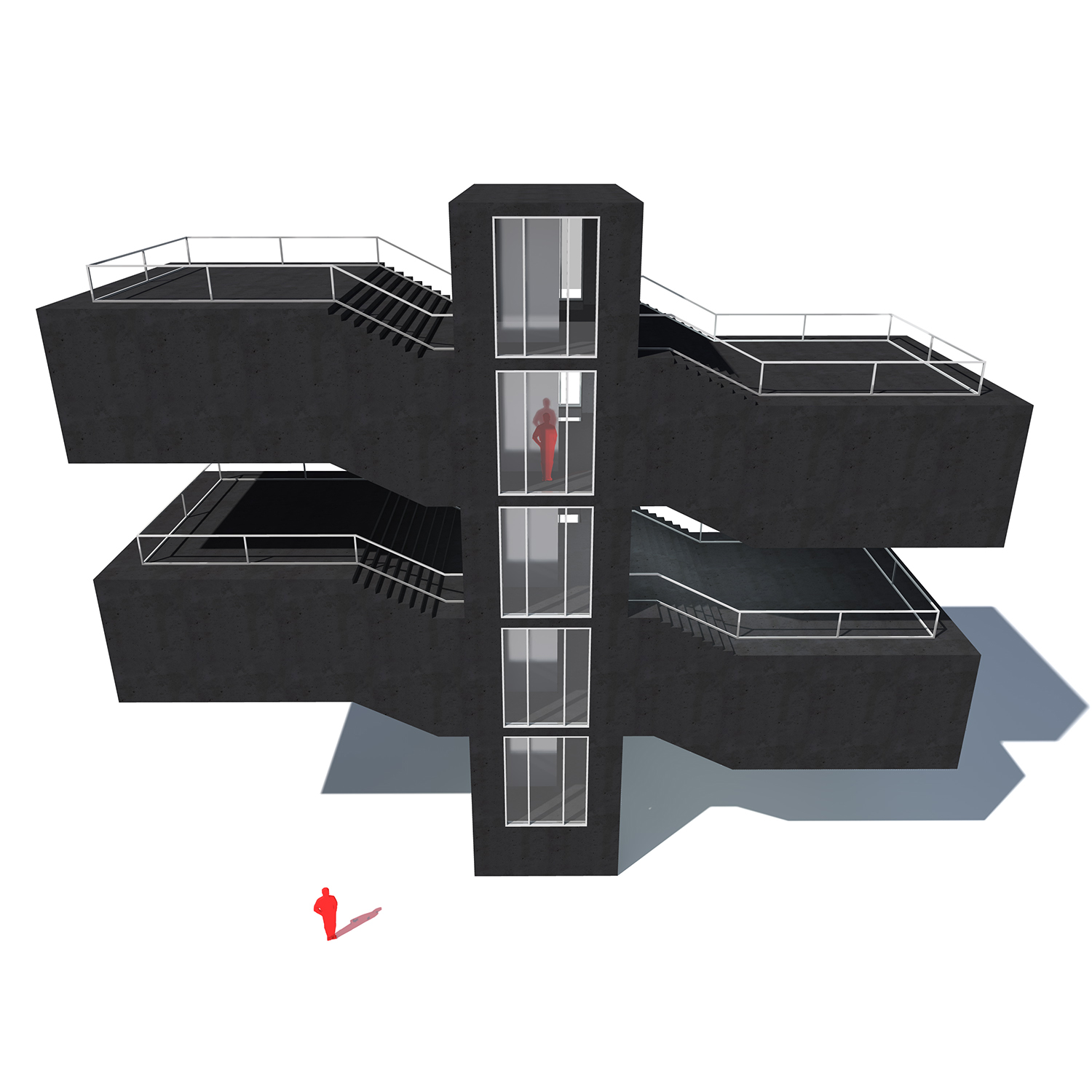
This building embodies an experimental architectural concept that expresses the idea of fragmentation, movement, and temporality. The central vertical core serves as the structural foundation from which three massive platforms protrude in different directions. These asymmetrical, seemingly floating levels create a sense of imbalance and instability, evoking the feeling that the building is in a state of continuous transformation. The architecture appears frozen in a moment of movement, as if it strives to become something else but never completes the process.

Each platform is connected to the core by staircases that seem to spill outward, extending beyond the building’s boundaries. This element emphasizes the idea of openness and freedom, giving the impression that the space is not enclosed but open for exploration. The staircases, smoothly transitioning from one level to another, appear to lead the observer to new horizons and perspectives, making the structure not just an object but a space for interaction.

The black facade accentuates the building’s drama and monumentality, giving it a sense of heaviness and strictness. At the same time, the glass walls create a contrast, adding lightness and transparency, allowing light to penetrate and making the internal spaces visible from the outside. This interplay between heaviness and weightlessness, between closed and open spaces, enhances the sense of inner tension and dynamism, prompting the viewer to reflect on the concepts of stability and change.

Overall, this architecture serves as a metaphor for life in motion, continuous adaptation, and transformation, where every element finds its balance, remaining on the edge between stability and constant change.